The band resisted lateral walk is one of the most underrated glute activation exercises out there. It’s also one you should be doing, especially if you are a runner.
It might not look like much at first. You’re just stepping side to side, right? But add a mini resistance band and suddenly your glutes have no choice but to wake up and do their job. If you’ve ever struggled with knee pain, hip tightness, or low back pain — this simple move can make a big difference.
Why Glute Activation Matters
Your glutes do a lot more than you might think. They play a major role in how you walk, run, lift, and move throughout the day. Strong, active glutes help stabilize your hips and protect your knees and lower back from injury.
But here’s the problem: a lot of people have what I called glute amnesia, which is just my way of saying your glutes aren’t firing the way they should.
This usually happens because:
-
You sit for long periods of time
-
You’ve had a past injury
-
Other muscles are compensating for weak glutes
When your glutes don’t activate properly, your body starts to rely on other muscles to do the work. Over time, that can lead to issues like knee pain, tight hips, and lower back discomfort, even in active people and runners.
That’s where glute activation exercises like the band resisted lateral walk come in.
How to Do a Band Resisted Lateral Walk
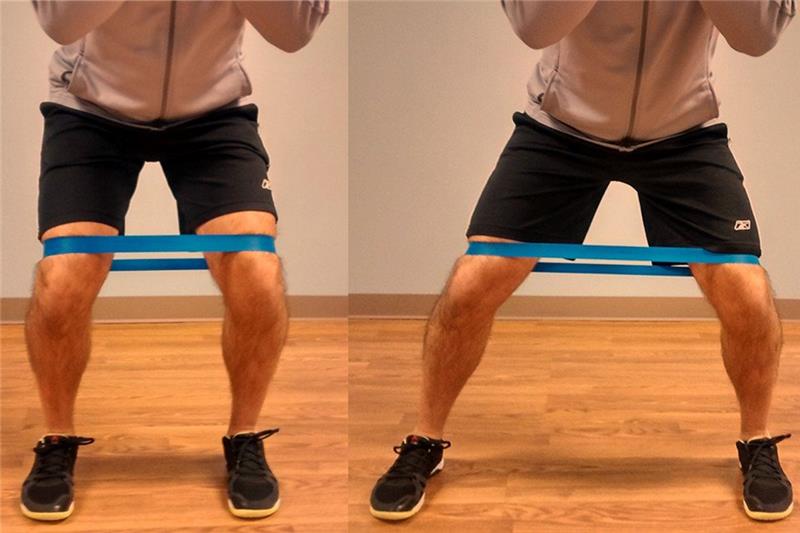
To get started, place a mini resistance band just above your knees. This position helps target your glutes without letting other muscles take over.
-
Stand with your feet hip-width apart
-
Keep your toes pointing forward
-
Maintain a slight bend in your knees (like a mini squat)
-
Step out to the side with one foot
-
Follow with the other foot without letting your feet come together
Keep tension on the band the entire time and try not to rock side to side as you move. You should feel this exercise working in your outer glutes right where your back pockets would be.
Start with:
-
10–12 steps to the right
-
10–12 steps to the left
-
Rest 15 seconds
-
Repeat for 2–3 sets
Tips for Better Glute Engagement
-
Move slow and controlled
-
Don’t drag your back foot
-
Keep your chest up and core engaged
-
Remember to breathe
You can use band resisted lateral walks as part of your warm-up before leg day, before a run, or even between strength training sets to keep your glutes activated.
Why this matters for runners
Distance running is basically a series of single-leg hops.
Every time your foot hits the ground, your hip muscles have to stabilize your pelvis so it doesn’t drop or rotate. When your glutes aren’t strong enough:
-
Your knee collapses inward
-
Your pelvis drops side-to-side
-
Your stride becomes less efficient
-
Your risk of injury goes way up
Things like:
-
Runner’s knee (patellofemoral pain)
-
IT band syndrome
-
Shin splints
-
Even low back pain
…have all been linked to weak hip abductors in runners.
A 2019 randomized controlled trial found that runners with patellofemoral pain who completed a hip-focused strengthening program had:
-
Reduced pain
-
Improved running mechanics
-
Better functional performance
Performance benefits too (not just injury prevention)
It’s not only about staying healthy, but also about running better.
A 2020 systematic review in Sports Medicine reported that improving hip muscle strength in endurance runners can:
-
Improve lower-limb alignment
-
Reduce unnecessary joint loading
-
Increase neuromuscular control during stance phase
All of which can improve your running by reducing how much energy it takes you to hold pace.
Looking for more guidance on your distance training program or to gear up with the best resistance bands? Visit your local Johnson Fitness & Wellness to learn more.