What is a Recumbent Exercise Bike?
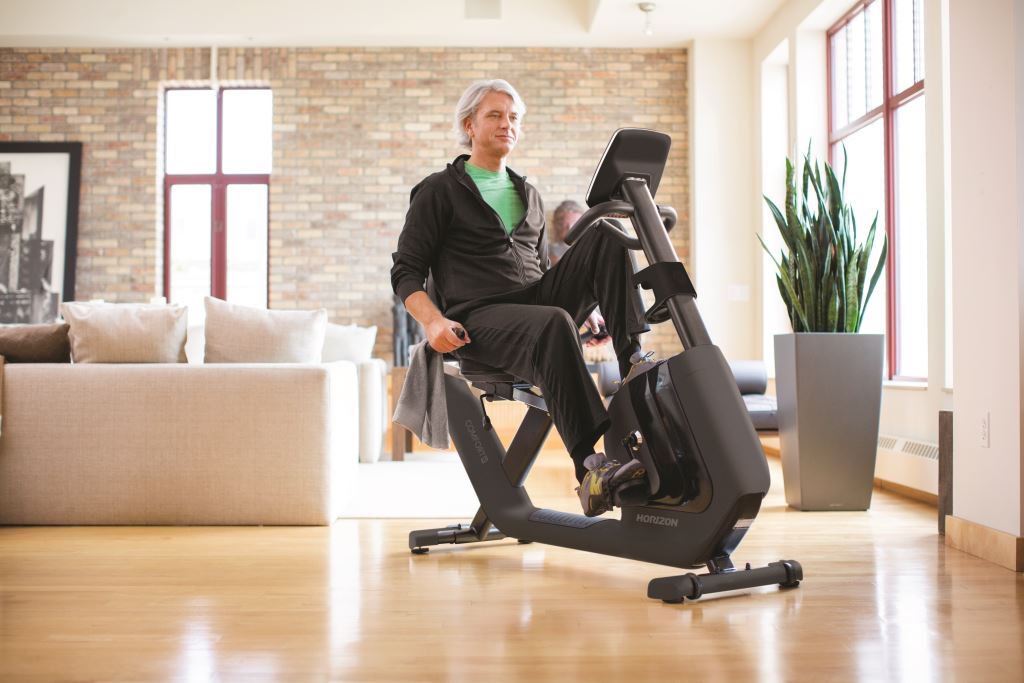
A recumbent bike is a type of stationary exercise bike that places you in a reclined position with a supportive seat and backrest and the pedals out in front of your body rather than beneath it.
In this guide, we’ll cover the top recumbent bike benefits and why they may make this machine a good fit for you. Click on one of the sections below to jump to it or keep reading to see our full list.
- Comfortable Workout
- Gentle on Joints
- Builds Lower Body Strength
- Builds Core Strength
- Improves Cardiovascular Health
- Good for Rehabbing Strength and Mobility
- Low Risk of Injury
- Great Workout for Seniors
Comfortable Workout
Leaning back instead of hunching forward changes everything. A recumbent bike supports your back with a wide seat and sturdy backrest that helps you distribute your weight more evenly than balancing on the mount on an upright exercise bike. The reclined position also keeps weight off your wrists and shoulders, making the ride feel more like settling into a chair than bracing for a workout. The result is that workouts feel more comfortable and longer sessions feel less taxing on your body.
Gentle on Joints
One of the biggest advantages of recumbent exercise bikes is the low-impact nature of their design. With built-in back support and balanced weight distribution, recumbent bikes ease the strain on your hips and knees. And because the pedals are positioned out front, your legs follow a more natural, circular motion that further reduces knee strain and prevents ankle strain.
Unlike running or climbing stairs, there’s no jarring force with each step. Instead, the design provides steady, low-impact resistance. That makes recumbent bikes a good exercise choice for beginners or anyone with arthritis or other joint problems.
Builds Lower Body Strength
When you ride a recumbent bike, your legs do most of the work. The forward-facing pedal position engages the big muscle groups in your lower body: quadriceps, hamstrings, glutes, and calves. As you push and pull through each cycle, those muscles work against resistance, gradually becoming stronger and more toned. A 2014 study even found that major leg muscle groups reach the same peak activity levels on a recumbent bike than they do on an upright bike.
Additionally, because the motion is steady and controlled, you can adjust the resistance to match your goals (lighter settings for endurance, heavier for power). This is one of the key benefits of the elliptical trainer as well.
Builds Core Strength
One of the less frequently mentioned benefits of recumbent bikes is the impact they can have on your core. Although they won’t sculpt your abs like planks or crunches, recumbent bikes quietly strengthen the muscles that support your posture and balance.
While your core isn’t as involved as it would be on an upright bike or during a targeted core workout, it still plays a role. As you pedal, your abs and obliques engage subtly to keep you stable against the backrest and balanced through the cycling motion. This is especially true for longer rides or when you’ve increased the resistance setting.
Improves Cardiovascular Health
Recumbent bikes are a great low-impact form of aerobic exercise. As your heart and breathing rates increase throughout your workout, you strengthen your heart and improve your lungs’ efficiency at delivering oxygen to your muscles. Done consistently (3-5 times a week at moderate intensity), recumbent bike workouts can help burn calories, reduce fat, lower blood pressure, and improve cholesterol levels.
Good for Rehabbing Strength and Mobility
The low-impact nature of recumbent bikes is also beneficial if you’re rehabbing from an injury or surgery since it limits stress on your knees, hips, and other joints. The reclined seating position also supports your back and distributes weight evenly, reducing the risk of strain or re-injury. From a mobility standpoint, the controlled pedaling motion promotes blood flow and flexibility in your legs.
All these factors can help you gradually rebuild your muscle strength without putting excessive stress on sensitive areas. Plus, you can gradually increase resistance levels as you progress to continue challenging your muscles and improving your strength.
Low Risk of Injury
Just as recumbent bikes can reduce your odds of re-aggravating an existing injury, they also reduce the risk of new injuries thanks to their design. The low-impact nature prevents overuse injuries to joints, and the controlled pedaling motion makes it easier to maintain proper form and alignment.
Great Workout for Seniors
All the recumbent exercise bike benefits outlined above make the machine an especially good workout option for seniors. Additionally, they’re highly accessible since the wide, low seat is easier to get in and out of than something like an upright bike or elliptical. The seated workout position also reduces the risk of fall injuries that could occur from loss of balance on other machines.
Choosing a Recumbent Bike
If the recumbent bike benefits above align with your fitness goals, it may be a great fit for you. At Johnson Fitness, we have recumbent exercise bikes from the best brands with options for every budget. If you have questions about any of them or want a recommendation, ask our home fitness experts and we’ll be happy to help you choose the right equipment.
Resources
- National Library of Medicine. “Electromyography During Pedaling on Upright and Recumbent Ergometer.” Accessed 27 August, 2025.