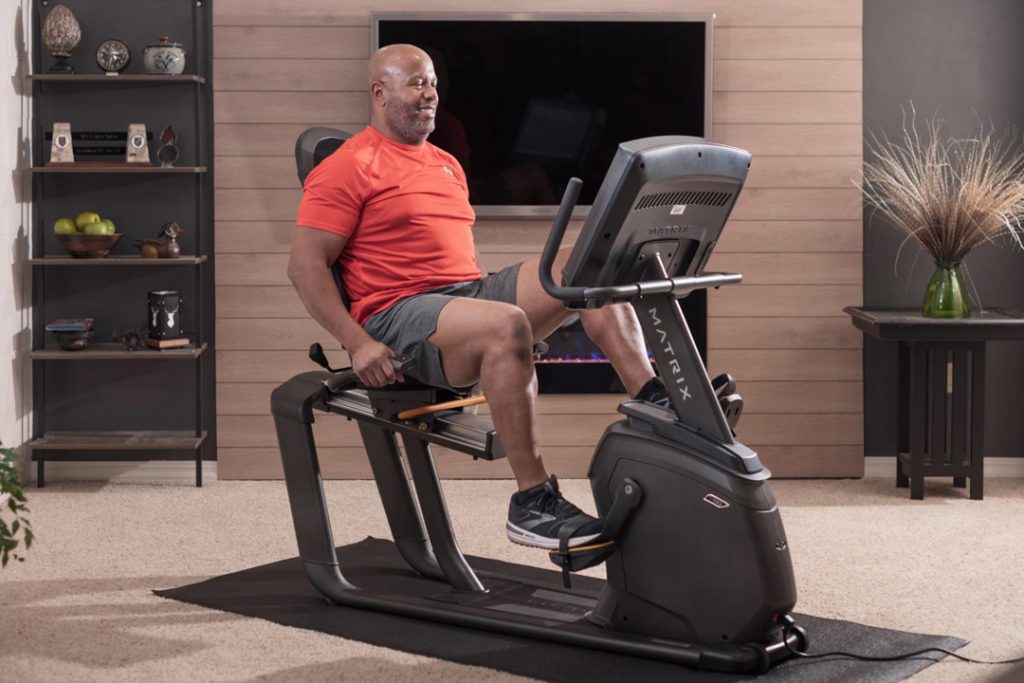
Setting up your exercise bike correctly is essential for a safe and effective workout. Whether you’re using a high-intensity indoor cycle or a stationary option like an upright exercise bike, proper adjustments ensure comfort, prevent injuries, and help you make the most of every ride.
In this guide, we’ll walk you through how to set up an exercise bike across four key areas: seat height, horizontal seat position, handlebars, and pedal position. Click on a section below to jump to it or keep reading to see all the setup tips and tricks.
Adjusting Seat Height
Setting the correct seat height is crucial for both comfort and injury prevention. If the seat is too low, your knees will bend excessively with each stroke, straining them and reducing your efficiency. If the seat is too high, your hips may rock side to side, causing lower back discomfort and reducing power transfer during your workout. At the correct height, your legs will move through a natural, effective range of motion, engaging your muscles more and giving you a better workout.
Follow these steps to find the right exercise bike seat height for you:
- Stand next to your bike and set the seat roughly at hip height.
- Sit and place the heel of your foot on one pedal.
- Push the pedal all the way down to the bottom of its rotation.
- Examine your leg. Your knee should be perfectly straight.
- Slide your feet into the straps/cages.
- There should be a 5-15 degree bend in your leg when the pedal is at the bottom.
- With the pedal at the 3 o’clock position, your knee should be over the ball of your foot.
A final check is to pull your foot out of the strap/cage with the pedal at the bottom. Your toes should be able to slightly touch the ground. If more of your foot can touch the ground, the seat is too low. If you can’t touch the ground, the seat is too high. If needed, continue making slight adjustments until you find the right height.
Horizontal Seat Position
Adjusting the seat position (forward/back) is essential for proper knee alignment and pedaling efficiency. If the seat is too far forward or backward, your knees can move out of alignment with the pedals, increasing the risk of strain or injury. Proper alignment also increases comfort and power during your ride. This is especially important for indoor cycle/spin bikes since you frequently pedal standing up, but similar benefits apply to all types of exercise bikes.
Follow these steps to find the right horizontal seat position for you:
- Sit on the bike and slide your feet into the straps/cages.
- Move your feet to the 3 o’clock and 9 o’clock positions.
- Note the position of your knees. They should align roughly over the pedal spindle.
- If your knees are in front of the spindle, move the seat back. If they’re behind, move the seat forward.
- Repeat this process until your alignment is correct.
Handlebar Setup
The handlebar setup on your bike plays a big role in maintaining comfort and protecting your upper body. Handlebars that are too low can cause you to hunch forward, leading to tension in your neck, shoulders, and lower back. Handlebars set too high may reduce efficiency by preventing you from engaging your core properly.
Unlike other aspects of an exercise bike setup, choosing the right handlebar height comes down to personal preference. For example, beginners prioritizing comfort may benefit from handlebars level with or slightly higher than the seat. On the other hand, experienced riders, especially on indoor cycle/spin bikes, may prefer a lower, more aggressive position for high-intensity intervals. Experiment and find the right fit for you. Doing so will reduce strain, support better breathing, and improve transitions between seated and standing cycling.
Pedal Position
Your pedal position is a key factor in ensuring both safety and efficiency during your workout. When your feet are placed correctly on the pedals, power is transferred smoothly through the entire pedal stroke. If your foot is too far forward or backward, it can place extra strain on your ankles, knees, or hips. Using the pedal straps (or clip-in pedals on indoor cycle/spin bikes) helps keep your feet secure, preventing slips and maintaining consistent form throughout the ride.
Whether your bike uses straps or toe cages, try to align the ball of your foot over the middle of the pedal and, in the case of a strap design, tighten it enough that your foot stays in place. The centered positioning reduces fatigue on longer rides and supports stability on indoor cycle/spin bikes during standing climbs or sprints.
Choosing an Exercise Bike
Take your time with these steps to ensure you have the best possible exercise bike setup. The right adjustments will make your workouts safer, more comfortable, and more effective. If you’re in the market for a new exercise bike, explore our extensive selection featuring top brands and options for every budget. If you need help choosing the right bike or have questions about the setup process, ask our home fitness experts. We’re here to help every step of the way.